




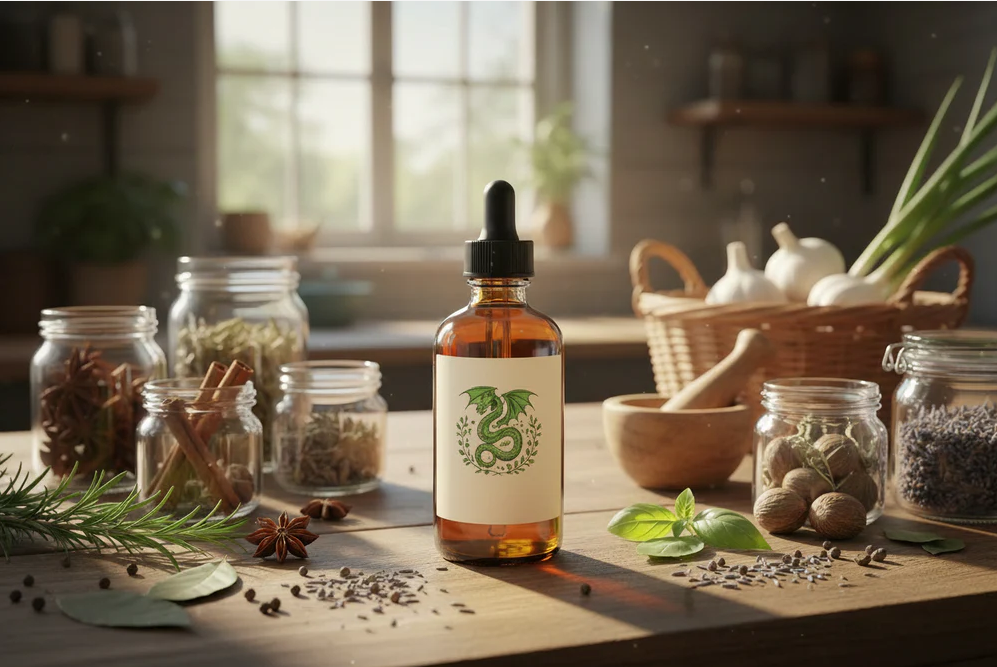
A Green Dragon tincture usually brings to mind a strong, green-hued, infused concoction. Traditionally, tinctures are a type of extraction that is made by immersing and soaking the herbs for a long time. The result is a popular alcohol-based tincture that can be used sublingually.
If you’re after the same tincture-style convenience and potency without the alcohol bite, a green dragon tincture oil is the move—especially when it’s made with a smooth carrier like MCT (medium-chain triglycerides) oil made from coconuts.
Below is a LĒVO-inspired guide to what Green Dragon Tincture is, why people love it, and how to make it.
What Is Green Dragon Tincture Oil?
A green dragon tincture oil is a botanical-infused oil designed to deliver many of the same use-cases as a tincture—simple dosing, versatile use, and concentrated effects—without relying on alcohol as the base.
Solvent vs. Oil Tinctures
- Solvent tinctures (traditional): Typically made with high-proof alcohol to extract cannabinoids and plant compounds efficiently. They’re often thinner in texture and can feel “hot” or sharp under the tongue.
- Oil tinctures: Use a food-grade oil to carry botanicals. They’re smoother, more kitchen-friendly, and easy to incorporate into recipes or daily routines.
How an Oil Tincture Differs From the Traditional
A classic green dragon is known for its deep green color and strong, herbaceous bite—often because alcohol pulls lots of chlorophyll and plant compounds. An oil-based version can still be green and robust, but it’s usually:
- Smoother to take
- More naturally compatible with food
- Less “burn” than alcohol tinctures
Why We Use MCT Oil
MCT oil is a favorite for tincture oils because it’s:
- Neutral in flavor
- Liquid at room temp (easy to measure and drop)
- Consistent for dosing (it doesn’t solidify like some oils)
If you want a clean, pourable base that plays nicely with both sublingual use and recipes, MCT is the move. Alternatively, you can also use glycerin.
What Are the Benefits of Green Dragon Tincture Oil?
People choose green dragon tincture oil for practical, everyday reasons—especially compared to slower, heavier edibles.
Ease of Use vs. Edibles
- Dropper-friendly and simple to portion
- Easy to add to a routine (coffee, smoothies, mocktails, sauces—when oil makes sense)
Time to Effects of Tinctures
Oil tinctures are commonly used sublingually (under the tongue) for potentially faster onset than traditional edibles, because some absorption may occur before digestion. If swallowed immediately, it behaves more like an edible and can take longer to pass.
Tincture oils (vs. traditional edibles) make it easier to:
- Dose with more flexibility
- Start low and go slow
- Adjust dose drop by drop
- Track what dose for you
Possible Therapeutic Uses of Tincture Oil
- Relieving pain
- Reducing nausea (esp. associated with chemotherapy)
- Reducing muscle spasms in paraplegics or people with multiple sclerosis
- Improve sleep
Flexible Dosing
Tincture oils make it easier to:
- Start low and go slow
- Adjust the dose drop by drop
- Track what works for you
What Does the Green Dragon Tincture Taste Like?
Traditional Alcohol-Based
- Very herbal and “green”: Think fresh-cut grass or strong leafy greens. This taste is because alcohol pulls chlorophyll and other plant compounds.
- Bitter: chlorophyll contributes noticeable bitterness, especially with longer soaks.
- Hot/boozy: high-proof alcohol can burn under the tongue and feel sharp on the palate.
Green Dragon Tincture Oil
A Green Dragon oil tincture (made with MCT or another edible oil) usually tastes much smoother than the traditional alcohol version.
-
Mildly “green” and herbal: Think grassy/leafy notes (like spinach or fresh herbs).
-
Less bitter than alcohol versions: Oil generally extracts fewer sharp, astringent notes than high-proof alcohol, so the bitterness is often softer.
-
Rich, slightly “fatty” mouthfeel: MCT has a clean, light oil texture, but you’ll still notice the slickness compared to alcohol.
-
Terpene-forward aromas: Depending on the strain, you might get piney, peppery, citrusy, or earthy vibes—those show up most in the smell and aftertaste.
Tincture Oil Made With LEVO
Traditional blender-style or milling methods physically shred plant tissues, which releases chlorophyll and other water-soluble compounds into the infusion — often resulting in a darker color and greener, harsher taste.
LEVO uses a patented bladeless infusion process that relies on intermittent soaking and gentle movement rather than chopping, blending, or pulverizing plant material.
By not slicing up the herb, LEVO minimizes the disruption of plant cell walls, which reduces the amount of chlorophyll and other bitter, water-soluble components entering the carrier oil.
LEVO's Cleaner Flavor Profile
Because LEVO’s method doesn’t aggressively break down plant matter:
- The infusion tends to be lighter in color and milder in taste than what you’d expect from rough mechanical maceration.
- Some reviewers note that this gentler extraction still pulls actice ingredients and terpenes effectively without destroying them but avoids that “weedy” chlorophyll taste.
Terpene Preservation Consideration
What exactly are terpenes? The very short answer is that natural aromatic compounds in plants give them their distinct smells and flavors, but for more information, check out our deep dive at Everything You Need To Know + Terpene Chart.
Most terpene preservation is driven by temperature control because terpenes are volatile and heat-sensitive. The gentle soak + controlled heat environment in LEVO helps maintain terpene integrity because the plant isn’t being sheared or overheated. This can translate to a richer aromatic profile in the finished oil compared to harsher extraction processes.
Do I Need to Decarb?
Yes. If you’re planning to use flower in this tincture, you’ll want to activate it first. This step is called decarboxylation (or “decarb”). In simple terms, gentle heat triggers a chemical change that helps the chemicals shift into their active forms and deliver the expected effects.
Natural Decarboxylation
When you smoke or vape, decarb happens automatically because high heat activates the plant compounds on contact. But for oral use—like oils, edibles, or tinctures—you need to decarb your flower before infusing it into an oil.
Non-activated flower won't produce the same high-potency effects, but will provide therapeutic benefits. The choice here for potency is yours.
Does an Alcohol Tincture Need to Decarb?
Yes, usually an alcohol tincture is made with decarboxylated flower. It is after this process that a high-proof alcohol is used as a solvent to extract the activated botanicals directly from the plant material.
Decarbing With the LEVO Infusion Machine
LĒVO simplifies the process by providing decarboxylation and infusion cycles. You can learn more about all 3 machines and find the one that is right for you here.
However, if you don’t have a LĒVO yet but still would like to try and make your own tincture, you can find manual oven and stovetop instructions here.
Can I Calculate the Potency of My Tincture Oil?
Dialing in the strength of your infused oil (and anything you cook with it) is straightforward—you just need a few key details: the amount of oil you’re using, the amount of flower you’re infusing, and the potency of your starting material. With those numbers, you can quickly estimate the milligrams in your infusion using our Edible Dosage Calculator.



1 comment
Rick Overholt
Do y’all have a recipe to make RSO or FECO with your machines? Thanks!
———
LEVO Oil Infusion, Inc. replied:
Hi Rick, great question! We are so sorry but we do not have a recipe for that as we do not recommend making those types of tinctures in the machines. The machines were designed to infuse flower and other botanicals into oil, butter, milk, honey, glycerin and vinegar. There are some ingredients we do not recommend using with our machines, you can find those ingredients via this link https://help.levooil.com/en-US/what-should-i-not-use-in-my-l%C4%93vo-34086. Some infüsiasts find success mixing certain ingredients after an infusion has been safely dispensed from the LĒVO into a heat-safe container. I hope this helps. Happy infusing!
Leave a comment
All comments are moderated before being published.
This site is protected by hCaptcha and the hCaptcha Privacy Policy and Terms of Service apply.