


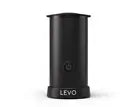


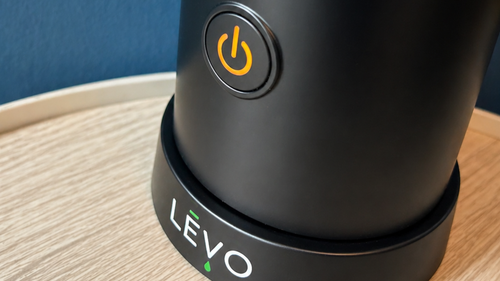
A batch that won't firm up is the most common gummy problem, and it's almost always fixable. If you're wondering why your gummies are not setting, the answer usually comes down to a few things: the ratio of mix to liquid, an oil that never fully blended in, a liquid that interferes with the gelatin, or not enough time to chill. This guide covers each cause, plus the other issues that come up most often on the LĒVO Gummy Mixer, so you can find the problem and correct it on the next batch.
Why won't my gummies set?
Gummies set because gelatin cools into a structure that holds the liquid in place. Anything that disrupts that structure keeps them soft. The usual causes are too much liquid or oil for the amount of mix, an oil that never fully blended in, a liquid that interferes with the gelatin, or simply not enough time in the fridge. Work through the sections below in order and you'll usually find the one at fault.
 .
. 
Your batch has too much liquid or oil
Gelatin can only hold so much before it stops firming up. If you added extra juice, extra water, or more infused oil than the recipe called for, the ratio tips and the batch stays loose. Measure the liquid and the oil rather than pouring by eye, and keep the oil at or below the amount the recipe specifies, usually up to about four tablespoons per batch. If a batch comes out soft, reduce the oil slightly next time before changing anything else.
Your fruit juice is stopping the set
This one surprises people. Fresh pineapple, kiwi, mango, papaya, and ginger contain enzymes that break down the protein in gelatin, so a batch made with their raw juice may never set, or may set and then turn runny in storage. The enzymes are deactivated by heat, so canned, bottled, or pasteurized versions of these juices work fine. If you want to use one of these flavors, reach for a shelf-stable juice rather than fresh-pressed, or heat fresh juice to a boil and let it cool before using it.
The oil never fully blended in
If your infused oil separates and pools on top instead of blending into the mix, the batch will set unevenly, with an oily layer that never firms. The fix is emulsification. After you add the oil in the second cycle, run that stir cycle again, as many times as it takes for the oil to disappear into the mixture. Only pour once the surface looks uniform with no visible oil.
You poured too soon, or didn't chill long enough
Gelatin needs time and cold to firm up. Pull a batch too early and you get gummy puddles. Chill your filled molds in the refrigerator until they're completely firm to the touch, which usually takes a few hours. Some batches set best overnight. Give them the full time before deciding a batch has failed.
Your gummies came out gritty
Grit comes from mix that didn't fully dissolve. Before you run the first cycle, stir the gummy mix and your liquid together into a smooth paste with no dry lumps. Skipping that step leaves undissolved bits that turn gritty in the finished gummy. If a batch is already gritty, you can rerun a heat-and-stir cycle to try to smooth it out, but pre-mixing prevents the problem in the first place.
The mixture set before you could pour it
If your mix starts to firm up in the mixer before it reaches the molds, it cooled too much. Run another heat-and-stir cycle to loosen it, then pour without delay. The Easy Pour Lid helps here, since it dispenses straight from the mixer into the molds and holds heat so the mix stays pourable while you fill the tray.
Your gummies are sticky or won't release from the molds
Homemade gummies have no preservatives, so they're more sensitive than store-bought. Sticky or sweating gummies usually need more chill time and airtight storage. Let them firm up completely before you unmold, and if they still stick, a short return to the fridge helps them release cleanly. A light dusting of sour gummy sugar also keeps finished gummies from sticking to each other.
How to store your gummies so they stay set
Once a batch is firm, keep it that way with airtight storage. At room temperature the gummies hold for several days, in the refrigerator for one to two weeks, and longer in the freezer, as long as you thaw them slowly. LĒVO's Gummy & Candy Molds make this easy, since their snap-on lids seal the tray for storage and are dry-erase safe, so you can label each batch with the date or strength right on the lid. That labeling habit also helps you troubleshoot, since a dated batch tells you whether a texture change came from age or from the recipe.
 .
. 
Frequently Asked Questions
Why won't my homemade gummies set?
Usually one of four things: too much liquid or oil for the amount of mix, oil that didn't fully blend in, a fresh juice that interferes with gelatin, or not enough chill time. Check those in order.
Can you fix gummies that didn't set?
Often, yes. If the batch is still soft, return it to the mixer, run a heat-and-stir cycle to melt it back down, correct the issue, and chill again. Gelatin can be reheated and reset, unlike some pectin-based mixes.
Does pineapple juice stop gummies from setting?
Fresh pineapple juice can, because it contains an enzyme that breaks down gelatin. Canned or pasteurized pineapple juice is fine, since heat deactivates the enzyme.
Why are my gummies gritty?
The mix didn't fully dissolve. Stir it with your liquid into a smooth, lump-free paste before running the first cycle.
Most setting problems trace back to ratio, blending, or time, and once you know what to look for, they're quick to correct. New to the process, or want to start from the beginning? See our beginner's guide to making infused gummies.



Leave a comment
All comments are moderated before being published.
This site is protected by hCaptcha and the hCaptcha Privacy Policy and Terms of Service apply.